Reconciliation
The foundation. Without this, the leak stays hidden.
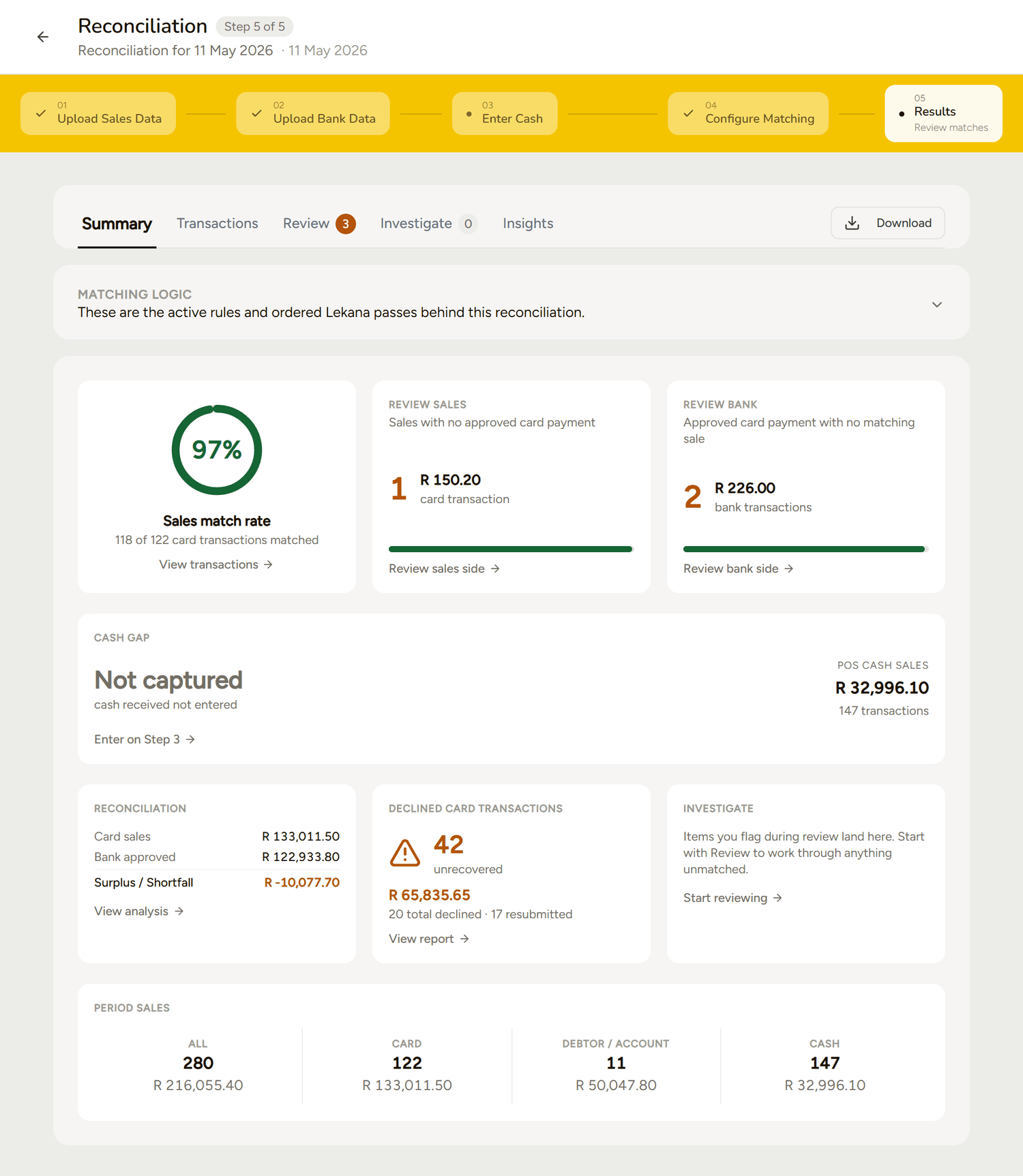
Reconciliation isn't the product. It's the instrument that turns a hunch into a number. Match every card. Match every debtor. Account for every cent of cash. What used to take a day takes under five minutes, and the gap that remains is exactly what you're looking for.
What gets matched
Three sides of the same day, all reconciled.
Most reconciliation tools handle the easy side. Card transactions match the bank because both sides emit a digital record. Lekana goes further. We treat cash as a ledger in its own right, with its own opening, outflows and closing count, so the side most likely to leak is held to the same standard as the bank.
Card & bank
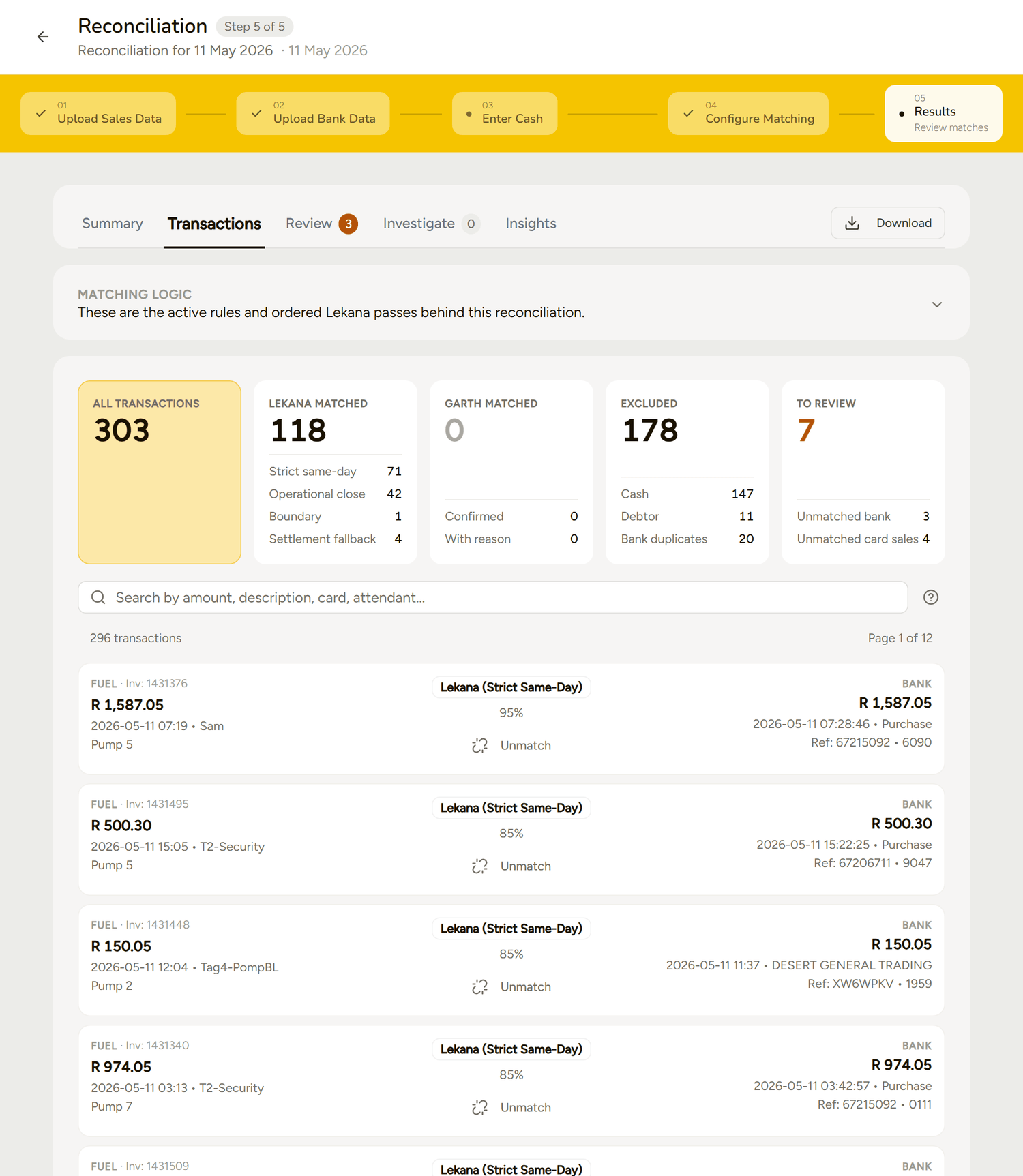
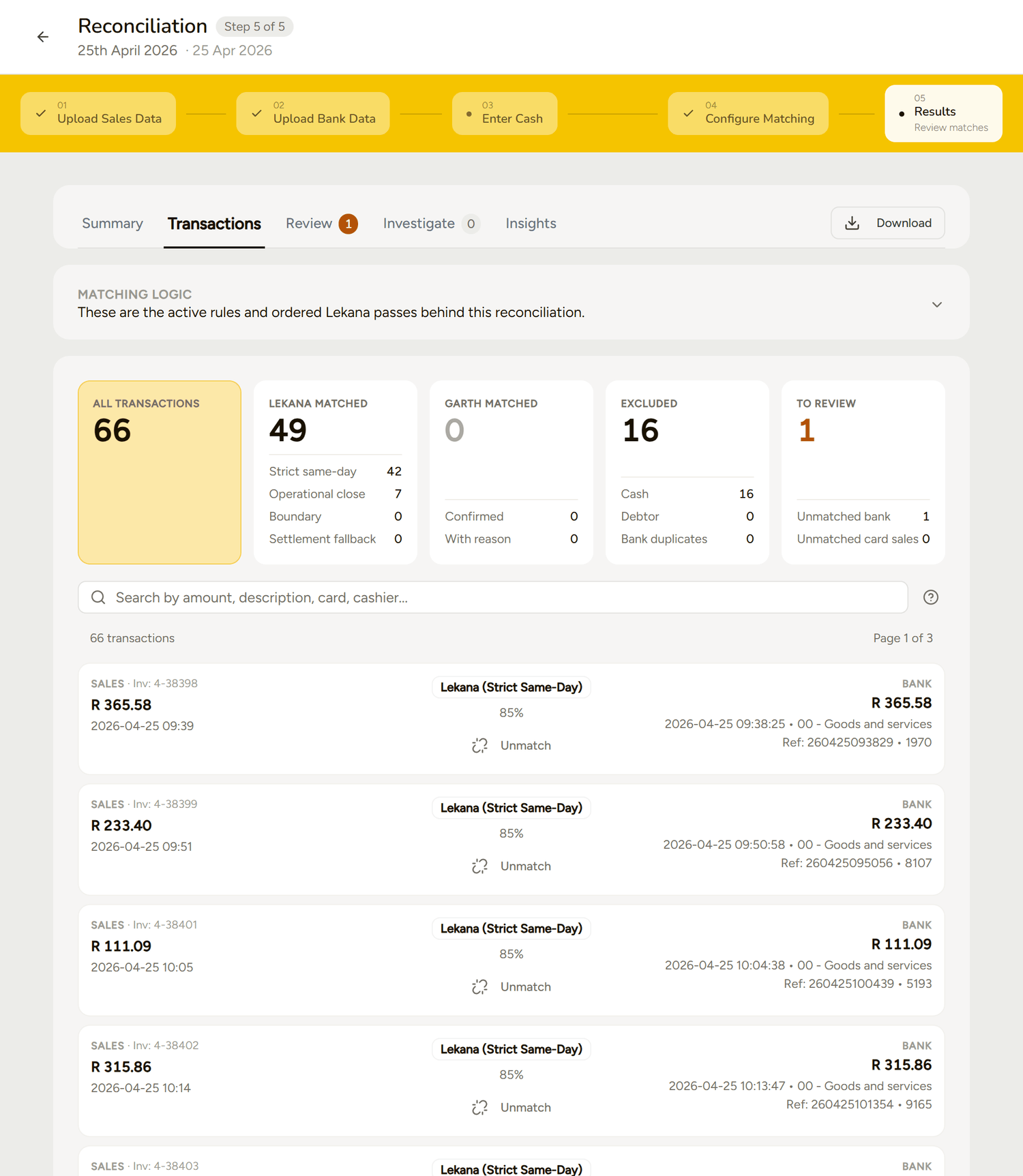
Transaction by transaction. Strict same-day first, then operational close, then settlement fallback. Every match scored.
Debtors
Monthly cycles reconciled against EFTs. Long-tail receipts grouped to the right account, not lost as orphans.
Cash New
Expected cash from the till versus actual cash that left the building. The gap nobody else is checking.
Human in the loop
The engine matches what it can. You confirm what it can't.
Lekana matches what it can match with confidence. What is left, you decide. Every transaction is either matched by the engine, confirmed by you, or sent to Investigate for follow-up. Nothing is ever silently discarded.
This is the difference between a reconciliation tool and a reconciliation partner. The system does the work it is good at. You do the work that needs judgement. Every decision is recorded against your name.
Five steps, in order
A flow, not a dashboard.
You move from upload to result in a single pass. Bring the files you already export, set up the cash gap, tell Lekana how to match, and read the answer.
Step 01
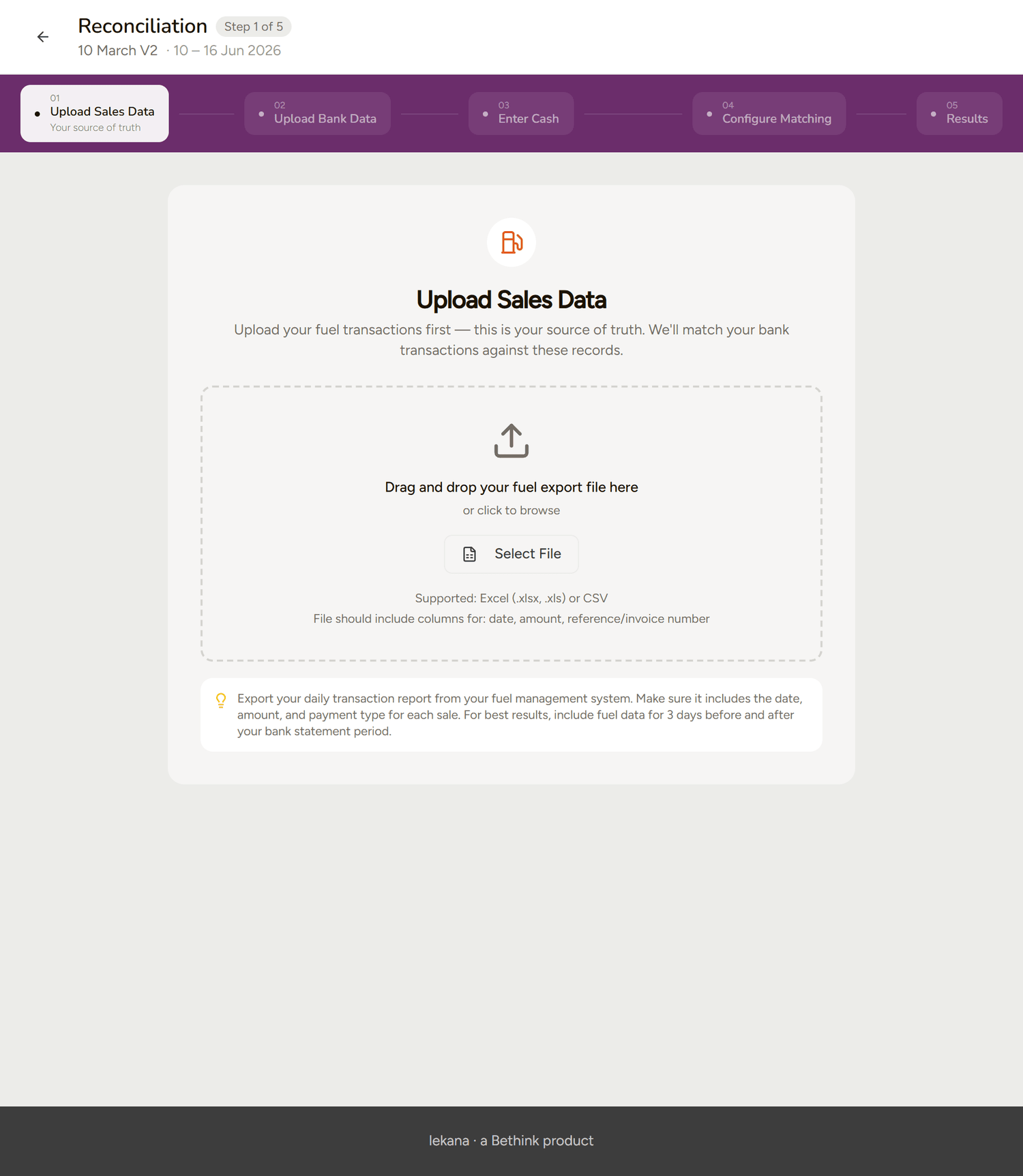
Upload your sales data.
Export from your point-of-sale or fuel management system. Drop it in. Format is auto-detected. This is your source of truth, the data the bank will be verified against.
Step 02
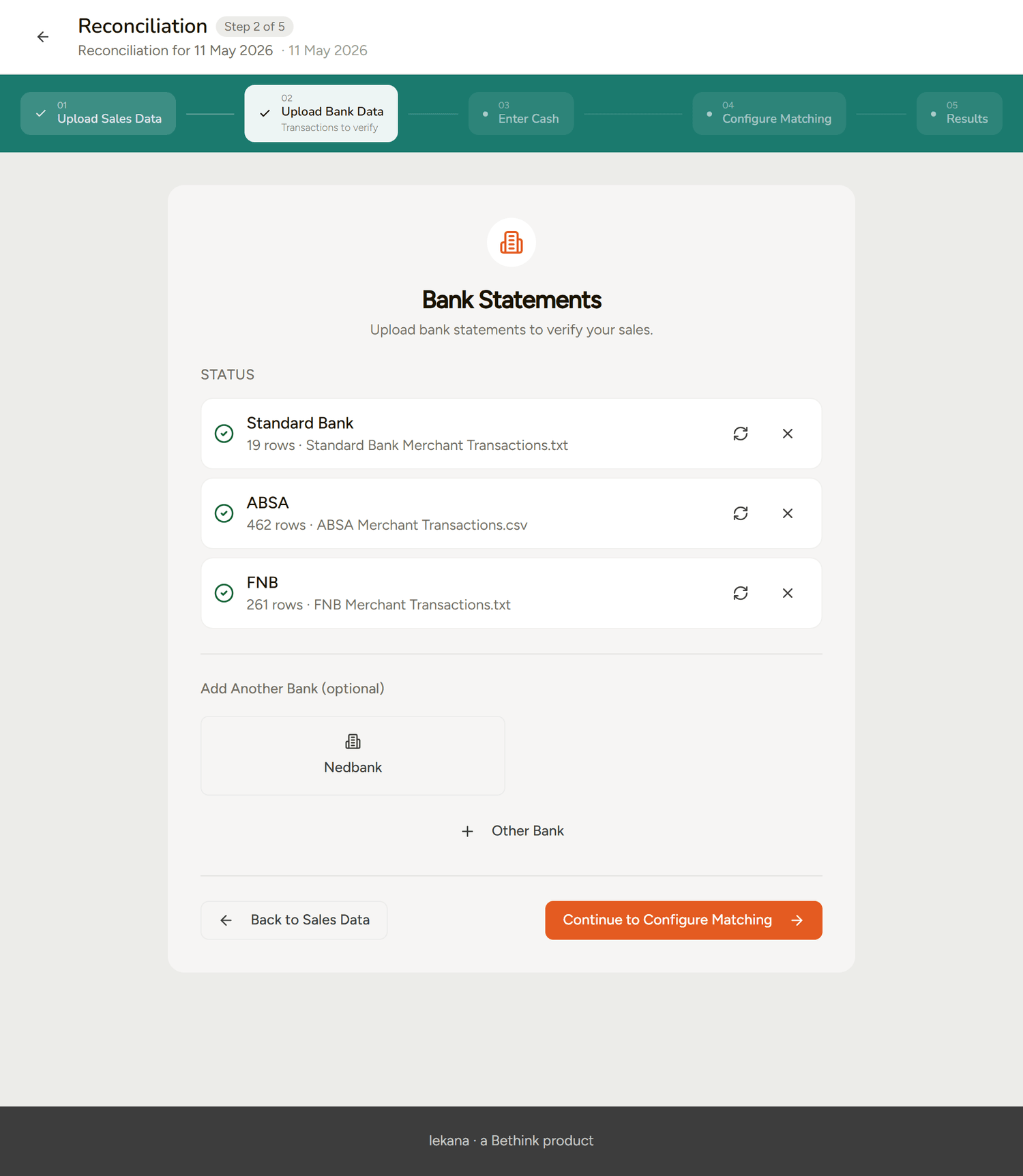
Upload your bank statements.
Statements from FNB, ABSA, Standard Bank or Nedbank. Multiple banks in the same period are fine. This is how the card and EFT side gets verified.
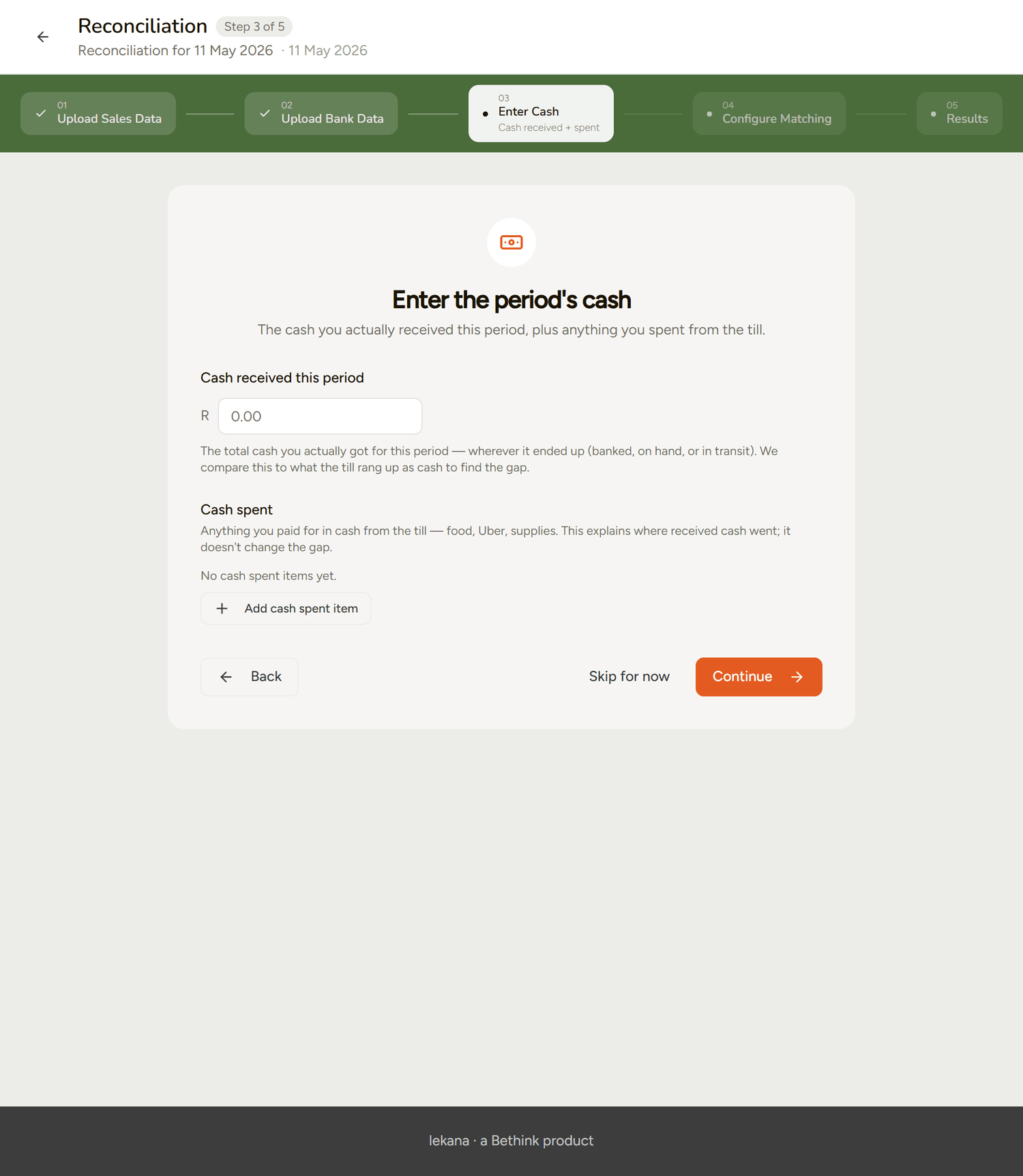
Step 03 New
Set up the cash gap.
Tell Lekana what the till expected against the cash that actually left the premises, whether to the bank, to cash-in-transit, or counted in the drawer. This closes the loop on the side that's hardest to track and the side where the tricks live.
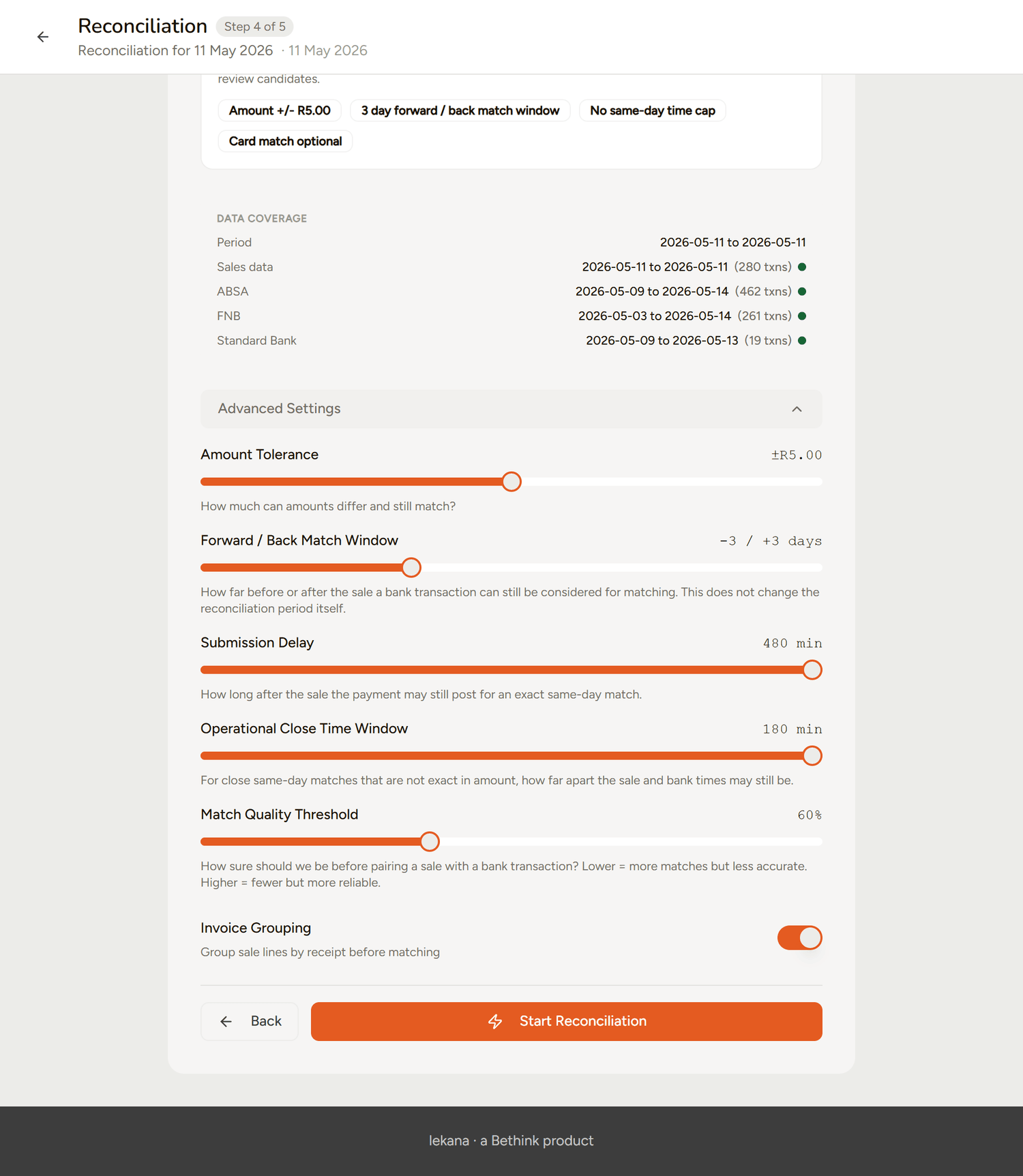
Step 04
Configure the matching.
Tell Lekana how your business settles. Sensible defaults out of the box, then tune the rules when you need to, so the matching fits your trade instead of forcing your trade to fit the tool.
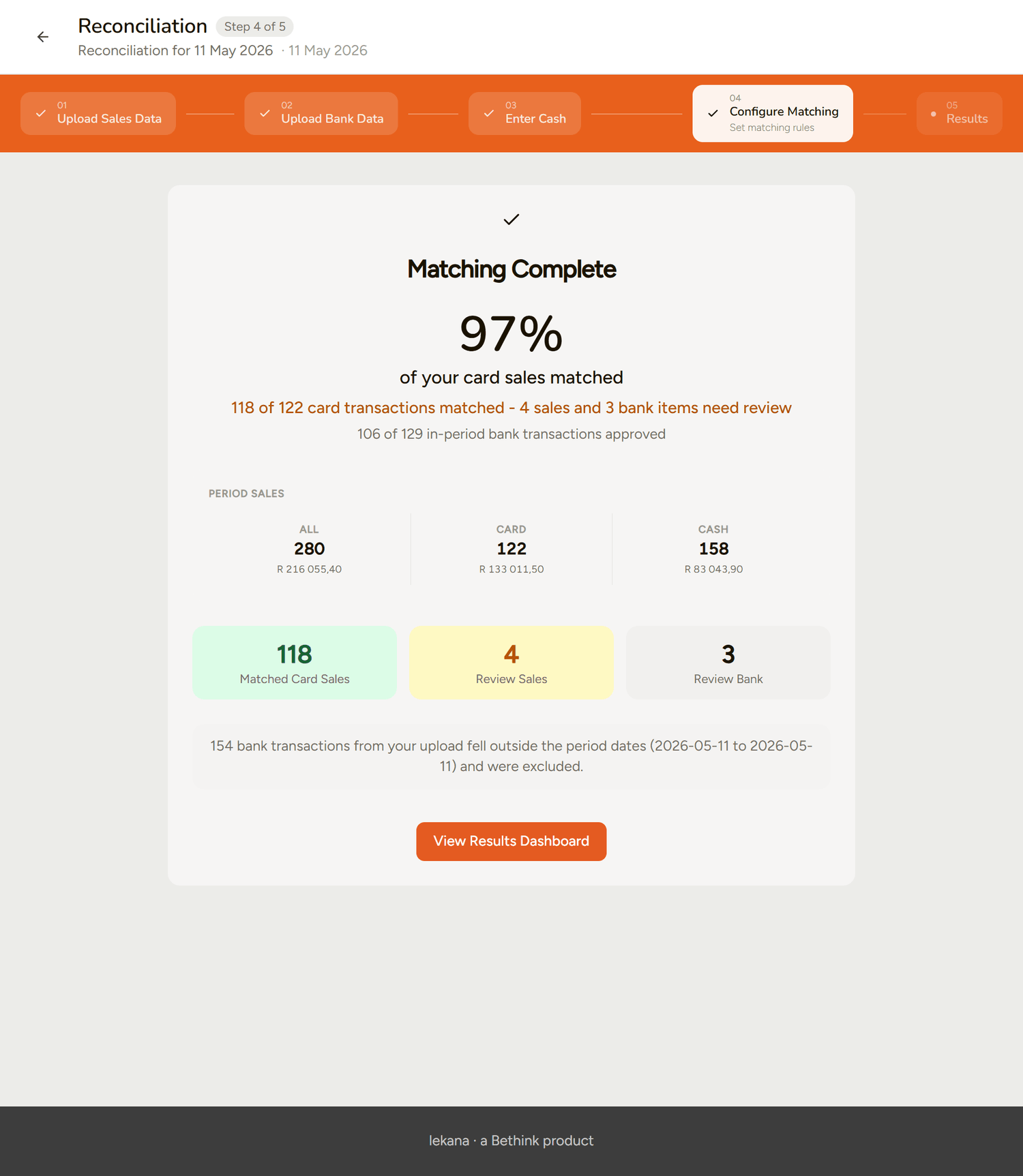
Step 05
Results.
The match rate. The verified total. The cash gap. The items needing your attention. This is the payoff: the few things that actually need you, separated from the noise.
One engine, every trade
Same instrument. Tuned to your trade.
The matching engine is the same. What changes is the language it speaks and the patterns it looks for. Pumps and attendants for fuel. Tills and cashiers for retail. Your accountant's reports, in the words your trade uses.
Available
Lekana fuel
Pump-level matching for service stations. Attendant shortfalls, declined cards and reprint scams. Proven on a real forecourt for six months.
Available
Lekana retail
Cashier and till reconciliation for shops. Cash sales held to the same standard as the bank. Live on a butchery today, built for grocers, liquor stores and general retail too.
Lekana retail
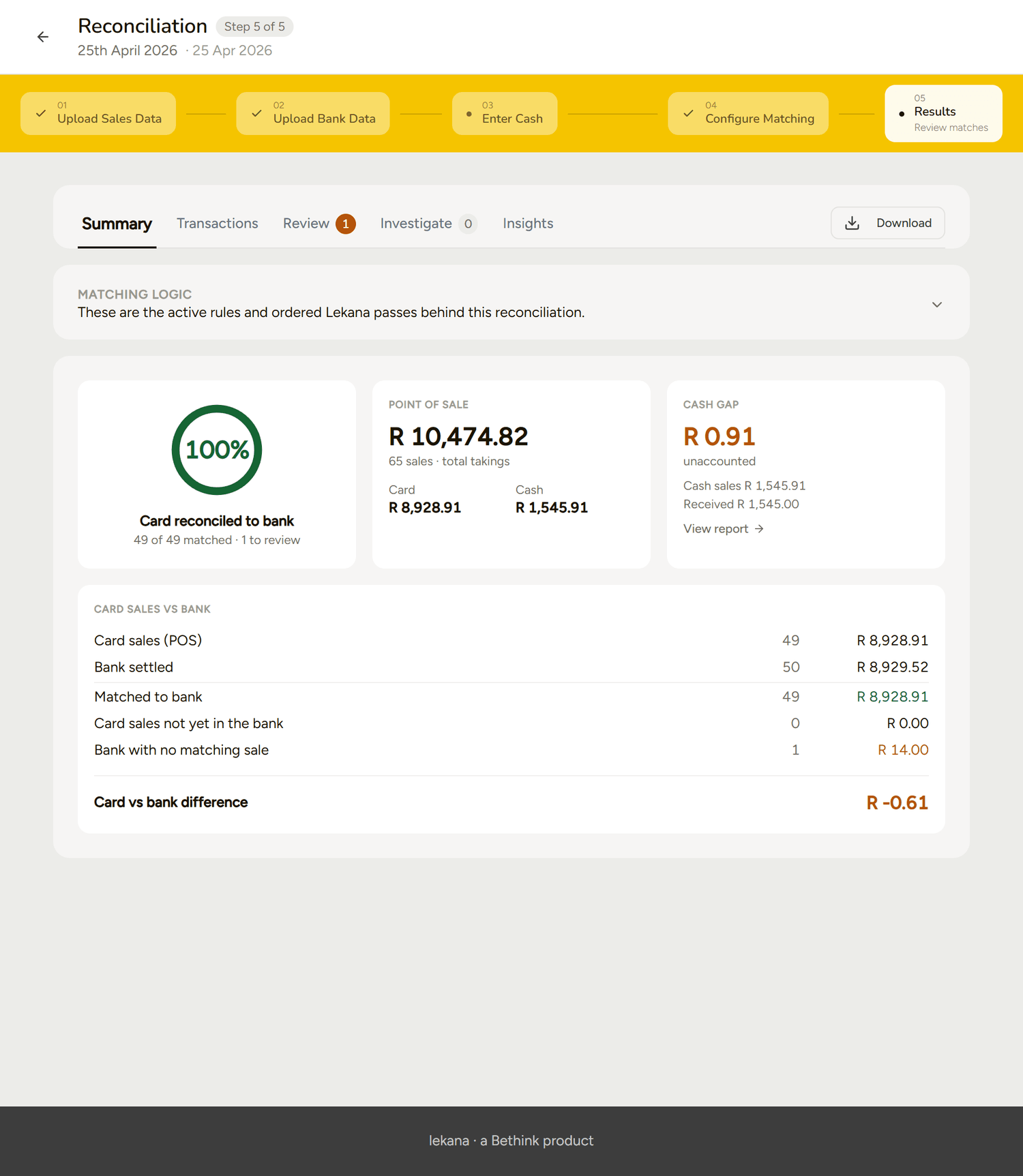
Month after month, every rand accounted for.
A retail butchery runs on Lekana. Card reconciled to the bank. Cash counted against the till. Across the whole period the books held, and Lekana proved it rather than assuming it. Sometimes the leak isn't there, and that certainty is worth just as much.
Reconciliation is the foundation. Insights is where the value lives.
The engine is honest. What it surfaces is what you came for.